
AI and automation
Connecting your systems
We connect your software to the services around it and build clean APIs so partners and future apps can connect to you.
Overview
Make your payments, texts, accounts and other tools work together.
When systems do not share data, people end up copying it between them, and payments are matched against orders by hand. A partner asking for an API you do not have can hold up a deal. Connecting your software to payment providers, messaging services and accounting tools removes that manual work, and a well-made API lets others connect to you.
Mapping comes first: what data moves between which systems, how often, and which one holds the master copy. Each connection is built against the provider's test environment, so no real payment or message is sent by mistake. Retries and alerts cover the moments when a provider is down, and live keys are switched on at a quiet hour.
You receive the working integration, API documentation and monitoring that shows if anything fails. Each partner gets its own keys with only the permissions it needs. A healthcare platform's patient and rider apps are connected to maps, notifications and each other this way, and a venue's website feeds its booking portal. A care plan keeps connections current when providers change.
- What you receive
- Integration · API documentation · Monitoring
- Typical technology
- REST · Webhooks · OpenAPI · Stripe · Twilio
Who it's for
Is this right for you?
If the two tools already offer a ready-made connector, switching it on may be all you need.
- A business matching payments against orders by hand
- Systems that don't share data, so staff copy it between them
- A company whose partners or customers are asking for an API
Scope
What goes into it
Every engagement is scoped to your goal. These are the parts most projects include.
- Payment gatewaysCard, wallet and bank payments, with reconciliation.
- MessagingSMS, email and WhatsApp notifications.
- AccountingInvoices and payments synced to your books.
- Partner APIsDocumented, versioned and secured.
- Data importsBulk CSV and Excel imports with templates.
- Devices and machinesLab analysers and imaging results brought into your system.
Timeline
How a typical project runs
Usual length: usually 2 to 8 weeks for each connection. Your written scope gives the exact plan.
01Week 1
Data flow map
We map what data moves between which systems, how often, and which one holds the master copy.
02Weeks 1–3
Sandbox runs
We build against each provider's test environment first, so no real payment or message is sent by mistake.
03Weeks 3–6
Connection build and error handling
We build the link, with retries and alerts for when a provider is down or sends bad data.
04Weeks 6–8
Live keys and first transactions
We switch to live keys at a quiet hour, check the first real transactions and keep watching.
One-time project
A fixed quote for an agreed scope, paid in milestones. You own the code and accounts once it's paid.
Monthly care plan
A monthly subscription that keeps your software secure, monitored and improving, with response times in writing.
Industries we have built this for
Getting started
What happens after you get in touch
- 01Tell us the problemA short form or a call. A senior lead replies within one working day.
- 02One callWe sign an NDA first if you need one, then go through your goals, users and current systems.
- 03Written scope and fixed quoteWithin 48 hours of the call, with milestones and a timeline.
- 04Build in milestonesYou see working software at every milestone, and you own what we build.
Questions
Before you ask
What changes the size of the job
- How well documented and stable the other system's API is
- Whether data flows one way or both ways
- The number of records and how quickly they must sync
Can you work with a regional payment gateway?
Yes. If it has an API, we can integrate it.
What happens if the other service changes its API?
Providers usually give notice. On a care plan we track those notices and update the connection before the old version is switched off.
Can each partner have their own access?
Yes. Each partner gets separate keys with only the permissions they need, and you can turn any of them off at once.
How is this priced?
As a one-time project with a fixed quote, agreed after a short call and paid in milestones. After launch you can add a monthly care plan for hosting, updates and support.
Previous work
Projects where we did this
 Client details hidden
Our own product
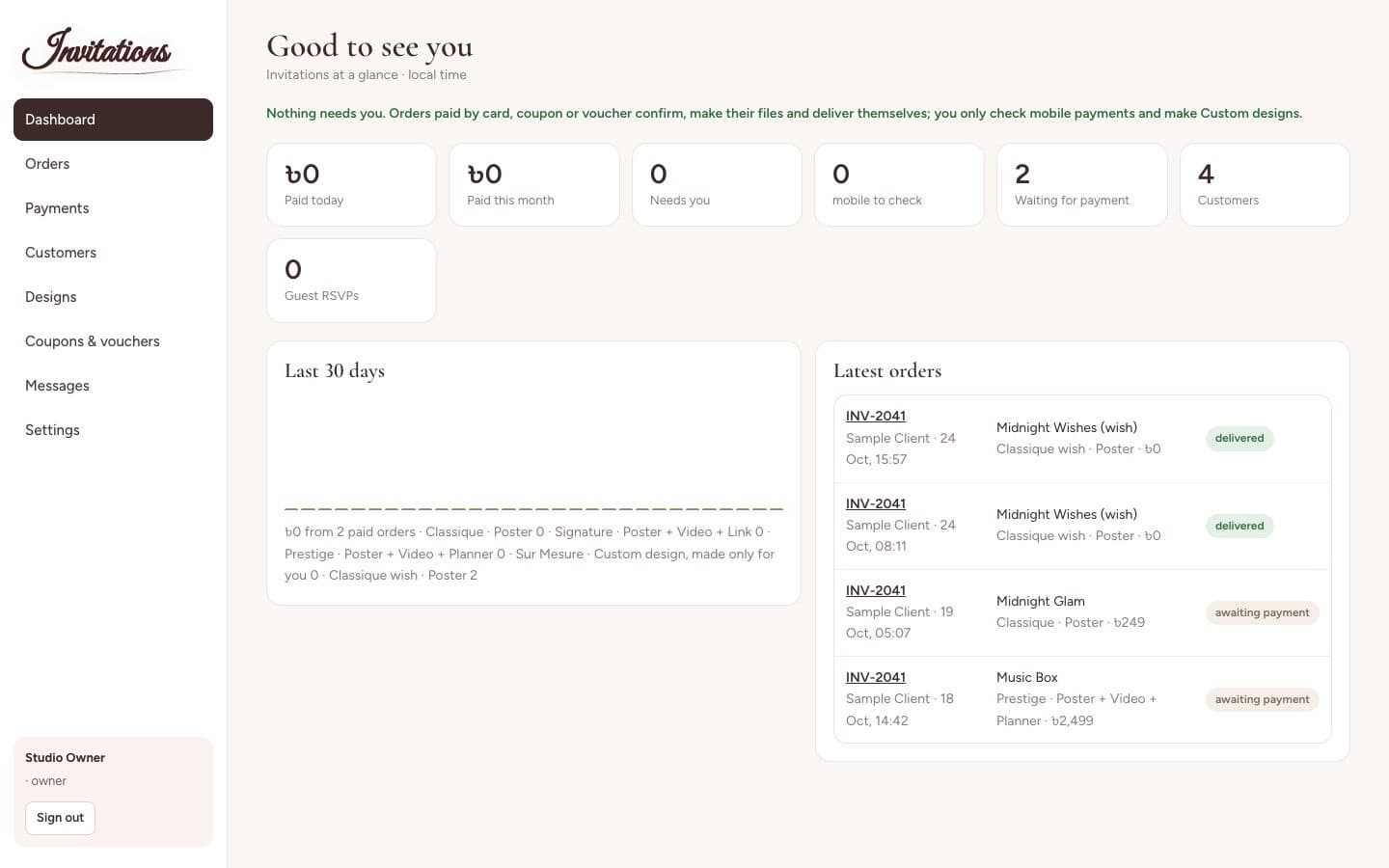
Admin portal for running an online invitation business
We built a portal where the team follows orders and payments and manages the design catalogue.We built the portal where the team follows orders and payments, manages customers and the design catalogue, and sets prices.
See what we built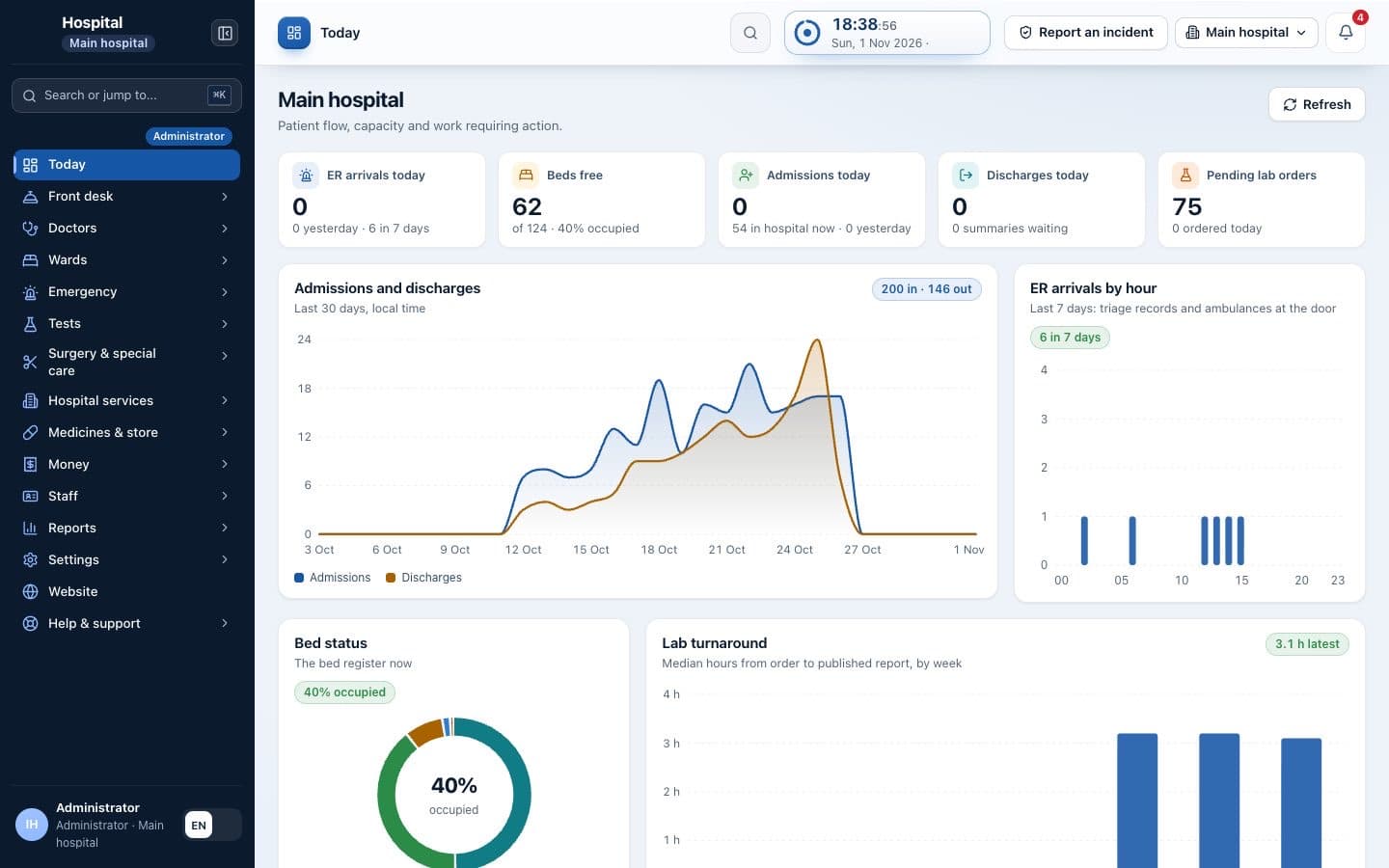 Client details hidden
Multi-specialty hospital
Hospital management system with website and patient portal
We built a hospital website, a patient portal and a staff system from front desk to billing.We built a public website, a patient portal for reports and a staff system for the front desk, wards, laboratory, pharmacy and billing.
See what we built Client details hidden
Wedding and banqueting venue, UK
Website for a wedding and banqueting venue
We built a website for the halls, weddings and dining that sends enquiries to the booking team.We built the website that shows the halls, weddings, dining and décor, and sends every enquiry to the booking team.
See what we built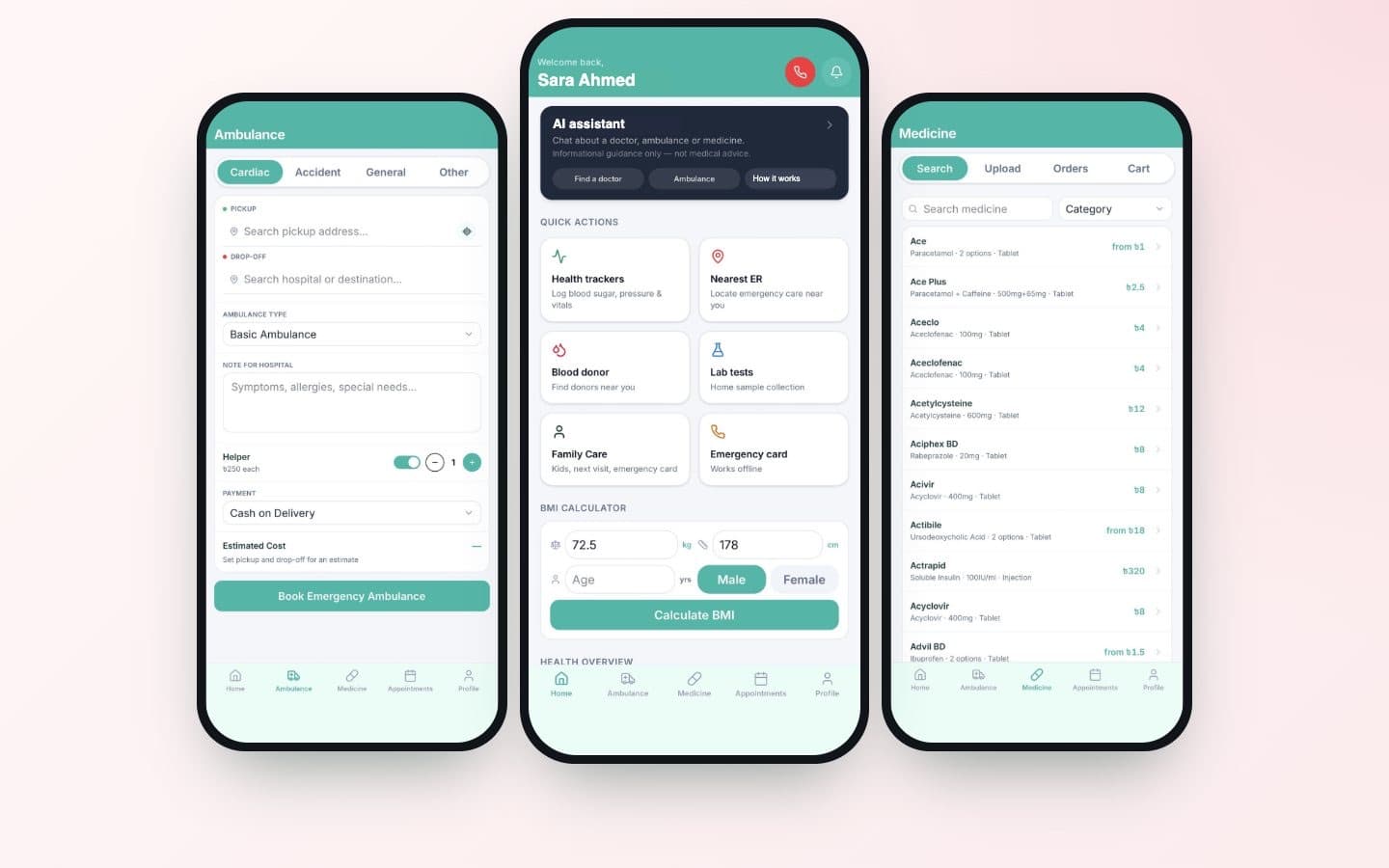 Client details hidden
Digital healthcare company
Patient app for booking healthcare from a phone
We built a phone app where patients book doctors, order medicine and keep records in one place.We built the iPhone and Android app where patients book doctors, order medicine, call an ambulance and book lab tests, with their records in one place.
See what we builtMore in AI and automation
Tell us what you need built.
Share the problem in a few lines. After one call you'll get a written scope and a fixed quote within 48 hours.